What is Transcendendental Meditation (TM)?
TM is a meditation technique that produces deep relaxation without effort, focus, or control. It is taught individually, and its benefits (mental, physical, physiological) are supported by over 380 peer-reviewed studies.
What makes TM different from other meditations?
TM is a natural, effortless mental technique that helps quiet the mind.
It is similar to other meditation techniques in that it is done with eyes closed, and if practiced regularly, it will have an impact on us.
However, TM is not just a meditation technique, TM is unique :
- Its practice is natural, easy, completely effortless and joyful.
- We practice sitting comfortably , there are no tiring poses.
- It doesn't require concentration, you don't have to imagine or visualize anything.
- His education is personalized and individual.
- Only trained, certified TM Teachers may teach.
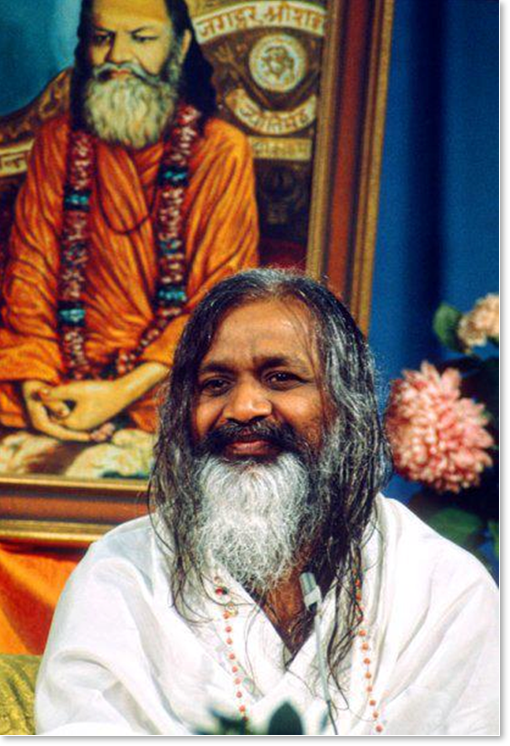
- The authentic TM technique was brought to the West by Maharishi Mahesh Yogi from a Vedic tradition that is thousands of years old.
- We experience its effects very quickly, from the first days .
- Regular practice provides lifelong benefits, proven by over 380 original, peer-reviewed, published scientific studies. (E.g. improved brain function, creativity, and academic performance; better sleep; decreased anxiety and stress; 30% reduction in cortisol levels; 48% lower risk of heart attack or stroke; 56% reduction in hospitalizations.)
How does Transcendental Meditation work?
The key to how the TM technique works is that it doesn't require effort, but rather builds on the natural inclination of the mind. The mind enjoys stillness, we just help it to turn inward to seek it.
Natural calming of the mind
In everyday life, the mind is constantly active: thoughts, feelings, plans, and memories alternate. When we meditate, this activity can gradually decrease.
Using a mantra helps the mind naturally move to more subtle levels of thought. There is no need to concentrate, control, or block out thoughts.
The process of transcendence
During the practice of TM, we experience increasingly subtle levels of thought, and then the mind briefly transcends this, experiencing a quiet, alert state of rest. This is called transcendence.
In this state, the mind remains alert while thought activity is reduced to a minimum, experiencing only pure awareness.
What happens during meditation?
What you actually experience from the process is that you start practicing and no matter how much your mind was clicking before, it starts to relax nicely , calm down, you start to enjoy inner peace, you are less and less aware of the outside world, your body, until finally only inner silence and deep physical relaxation remain. Then thoughts zigzag again , noises creep in, but you sink back into the pleasant peaceful calm . Don't imagine that you go down in an elevator and for 20 minutes there is only complete silence and world peace without thoughts until the elevator brings you back, this is a dynamically undulating process, which will always provide a different subjective experience depending on the current state of your mind and body, but that's fine .
To whom is TM recommended?
Transcendental Meditation is practiced by people of all ages and walks of life around the world.
Many people learn it because they want to:
-
reduce stress
-
sleep better
-
feel more energy in everyday life
-
to think more clearly
-
increase their creativity
-
to live a more balanced life
To whom is TM NOT recommended?
Because the technique is simple and natural, anyone can learn it and most people can easily incorporate it into their daily routine, but we do not recommend it to those who:
-
don't want to dedicate time to meditation (about 20 minutes twice a day)
- don't want to do things for themselves
Scientific Research on Transcendental Meditation
Transcendental Meditation is one of the most researched meditation techniques in the world. In recent decades, numerous scientific studies have investigated the effects of TM.
Research has examined the effects of meditation in the following areas, among others:
Decreased anxiety
Normalization of blood pressure
Decreased insomnia
Growth of Mental performance
General well-being
Frequently Asked Questions about the TM technique
What is Transcendental Meditation (TM)?
Transcendental Meditation is a simple, natural, and effortless mental technique practiced for 20 minutes twice a day sitting comfortably with eyes closed, providing deep rest to the nervous system.
In fact, TM is not practiced primarily for the experiences during meditation, you do not “have” to feel, imagine, experience anything, empty your mind or control your thoughts. Many people only experience a natural, very deep relaxation, but everyone experiences that their lives, their everyday lives, become better, easier, more joyful. It helps reduce stress, improves brain function and general well-being, these are the things we do it for.
How does the TM technique work?
TM is a natural meditation technique that uses the mind's natural ability to enjoy stillness. The mind, with a little help, can become still at any time, experience the subtler states of thought, and transcend them to rest in the silence of the Self. The trick is to use a personalized mantra that keeps the mind alert but undirected, so that it spontaneously and effortlessly moves inward toward greater calm, peace, and harmony.
Do I need to change my lifestyle or religious beliefs?
Not at all. Transcendental Meditation is a mental technique, not a religion, philosophy, or lifestyle. It can be safely practiced alongside any personal beliefs or background.
Is Transcendental Meditation difficult to learn?
No, learning TM is very easy and simple. Anyone can learn it regardless of age, background, or mental state, as it relies on the natural tendency of the mind.
How is TM different from other meditations?
The uniqueness of TM is the process of “transcendence”: we go beyond the experience of thoughts and reach the deepest level of the mind, the source of thoughts, the ever-quiet, calm level of the Self.
All this in a natural, easy-to-learn process that does not require concentration or control, at any time. Because transcendence can be achieved spontaneously or in other ways, but TM provides a very effective technique.
What are the beneficial effects of Transcendental Meditation?
Practicing TM can help reduce stress, improve mental focus, increase emotional stability, improve sleep, and improve overall well-being and health. It can also help you develop creativity, experience inner peace, and create a more harmonious environment.
When and where can I feel the benefits of TM?
Most people experience deep relaxation and inner calm during their very first meditation sessions. Noticeable stress reduction and better sleep typically develop within weeks of regular practice.
Is it safe to practice TM?
Yes, TM is a completely safe and natural method of stress reduction and self-improvement. It has no known side effects and can be practiced by anyone, regardless of age or physical condition.
If someone is undergoing psychiatric treatment with medication, we should consult with the psychiatrist to see if he or she recommends practicing the technique during the current phase of treatment.
What long-term results can I expect from practicing TM?
By practicing the Transcendental Meditation technique regularly, you can experience lasting changes, such as deeper inner peace, better stress management, increased creativity and productivity, improved overall health and well-being, better sleep quality, and improved relationships with others.
Is TM effective compared to other stress management methods?
TM is one of the most researched meditation techniques, and its effectiveness has been proven by numerous scientific studies. Based on personal experience, many people find that TM works faster and more deeply than other stress management methods. In the United States, it has been found to be more effective than anything else in treating PTSD (post-traumatic stress disorder) among war veterans.
Where does TM come from?
The Transcendental Meditation technique is an ancient, natural method, part of the Vedic knowledge that dates back thousands of years. In the Vedic tradition that survived in India, this knowledge was passed down from master to disciple and was not widely spread. It was Maharishi Mahesh Yogi who brought the TM technique to the Western world in the late 1950s and made it available worldwide by building an international movement and training TM teachers. TM is not a religion, a philosophy, or a way of life, but a simple, effective, universal human technique.
From the beginning, Maharishi emphasized that the effects of TM should be scientifically proven. This technique is one of the most extensively researched meditation methods: since 1970, more than 380 studies published in peer-reviewed scientific journals have confirmed its beneficial effects.